Cinemas of the World
Film and Society from 1895 to the Present
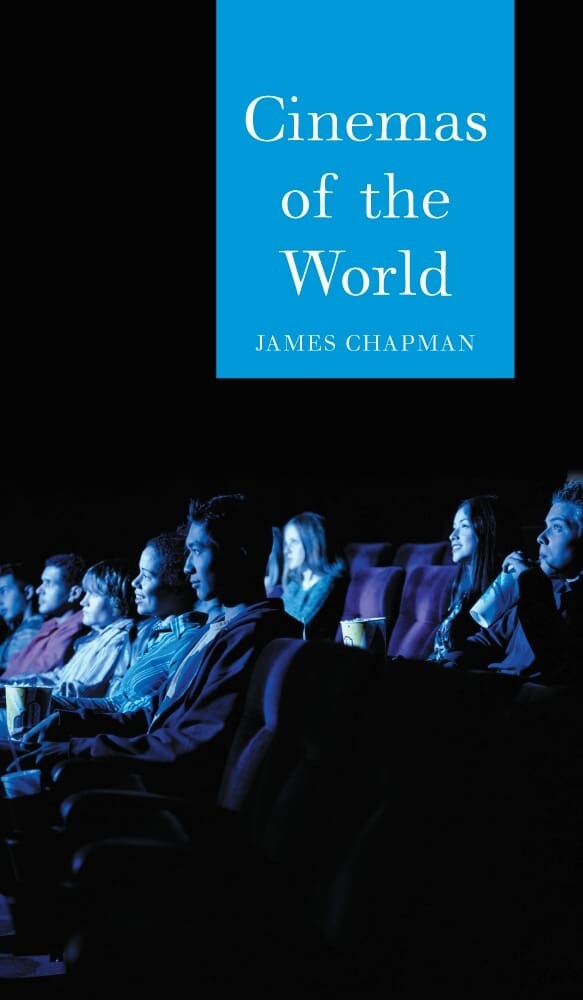
James ChapmanThe cinema has been the pre-eminent popular art form of the twentieth century. This title examines the relationship between film and society in the modern world: film as entertainment medium, film as a reflection of national cultures and preoccupations, film as an instrument of propaganda.
The cinema has been the pre-eminent popular art form of the twentieth century. In Cinemas of the World, James Chapman examines the relationship between film and society in the modern world: film as entertainment medium, film as a reflection of national cultures and preoccupations, film as an instrument of propaganda. He also explores two interrelated issues that have recurred throughout the history of cinema: the economic and cultural hegemony of Hollywood on the one hand, and, on the other, the attempts of film-makers elsewhere to establish indigenous national cinemas drawing on their own cultures and societies.
Chapman examines the rise to dominance of Hollywood cinema in the silent and early sound periods. He discusses the characteristic themes of American movies from the Depression to the end of the Cold War especially those found in the western and film noir – genres that are often used as vehicles for exploring issues central to us society and politics. He looks at national cinemas in various European countries in the period between the end of the First World War and the end of the Second, which all exhibit the formal and aesthetic properties of modernism. The emergence of the so-called ‘new cinemas’ of Europe and the wider world since 1960 are also explored.
The cinema has been the pre-eminent popular art form of the twentieth century. This title examines the relationship between film and society in the modern world: film as entertainment medium, film as a reflection of national cultures and preoccupations, film as an instrument of propaganda.
The cinema has been the pre-eminent popular art form of the twentieth century. In Cinemas of the World, James Chapman examines the relationship between film and society in the modern world: film as entertainment medium, film as a reflection of national cultures and preoccupations, film as an instrument of propaganda. He also explores two interrelated issues that have recurred throughout the history of cinema: the economic and cultural hegemony of Hollywood on the one hand, and, on the other, the attempts of film-makers elsewhere to establish indigenous national cinemas drawing on their own cultures and societies.
Chapman examines the rise to dominance of Hollywood cinema in the silent and early sound periods. He discusses the characteristic themes of American movies from the Depression to the end of the Cold War especially those found in the western and film noir – genres that are often used as vehicles for exploring issues central to us society and politics. He looks at national cinemas in various European countries in the period between the end of the First World War and the end of the Second, which all exhibit the formal and aesthetic properties of modernism. The emergence of the so-called ‘new cinemas’ of Europe and the wider world since 1960 are also explored.
The cinema has been the pre-eminent popular art form of the twentieth century. This title examines the relationship between film and society in the modern world: film as entertainment medium, film as a reflection of national cultures and preoccupations, film as an instrument of propaganda.
The cinema has been the pre-eminent popular art form of the twentieth century. In Cinemas of the World, James Chapman examines the relationship between film and society in the modern world: film as entertainment medium, film as a reflection of national cultures and preoccupations, film as an instrument of propaganda. He also explores two interrelated issues that have recurred throughout the history of cinema: the economic and cultural hegemony of Hollywood on the one hand, and, on the other, the attempts of film-makers elsewhere to establish indigenous national cinemas drawing on their own cultures and societies.
Chapman examines the rise to dominance of Hollywood cinema in the silent and early sound periods. He discusses the characteristic themes of American movies from the Depression to the end of the Cold War especially those found in the western and film noir – genres that are often used as vehicles for exploring issues central to us society and politics. He looks at national cinemas in various European countries in the period between the end of the First World War and the end of the Second, which all exhibit the formal and aesthetic properties of modernism. The emergence of the so-called ‘new cinemas’ of Europe and the wider world since 1960 are also explored.
-
'
Chapman is a tough-thinking, original writer . . . an engaging, excellent piece of work.
'David Lancaster, Film and History
-
'
fascinating . . . [Chapmans] style is easy and transparent, his cultural history expertly sifted and coherently presented . . . Cinemas reach is truly global, and Chapmans comparative survey does ample justice to its magnitude
'The Times
-
'
By bringing together often disparate strands of published knowledge into a cohesive synthesis, and by adding his own perceptive observations and analysis, Dr Chapman has conjured up a valuable and unique addition to the literature of world cinema
'Sesame
Preface
PART I: INTRODUCTION
1. Film History: Sources, Methods, Approaches
2. World Cinemas: Theoretical and Historical Perspectives
PART II: SILENT CINEMA
3. Early Cinema
4. The Emergence of National Cinemas
PART III: HOLLYWOOD CINEMA
5. The Dream Factory
6. New Hollywood
7. American Genres, American Society
PART IV: EUROPEAN CINEMAS
8. European Cinemas in Peace and War
9. New Waves, New Cinemas
10. Popular Genres, Popular Pleasures
PART V: WORLD CINEMAS
11. The Challenge of Third Cinema
12. Bollywood and Beyond
13. Asiatic Cinemas
14. Middle Eastern Cinemas
15. Anglophone Cinemas
PART VI: CONCLUSION
16. Cinema Without Frontiers
References
Select Bibliography
List of Illustrations
General Index
Film Index
James Chapman is Professor of Film Studies at the University of Leicester. His previous books include Licence To Thrill: A Cultural History of the James Bond Films (1999/2024) and British Comics (2011).