


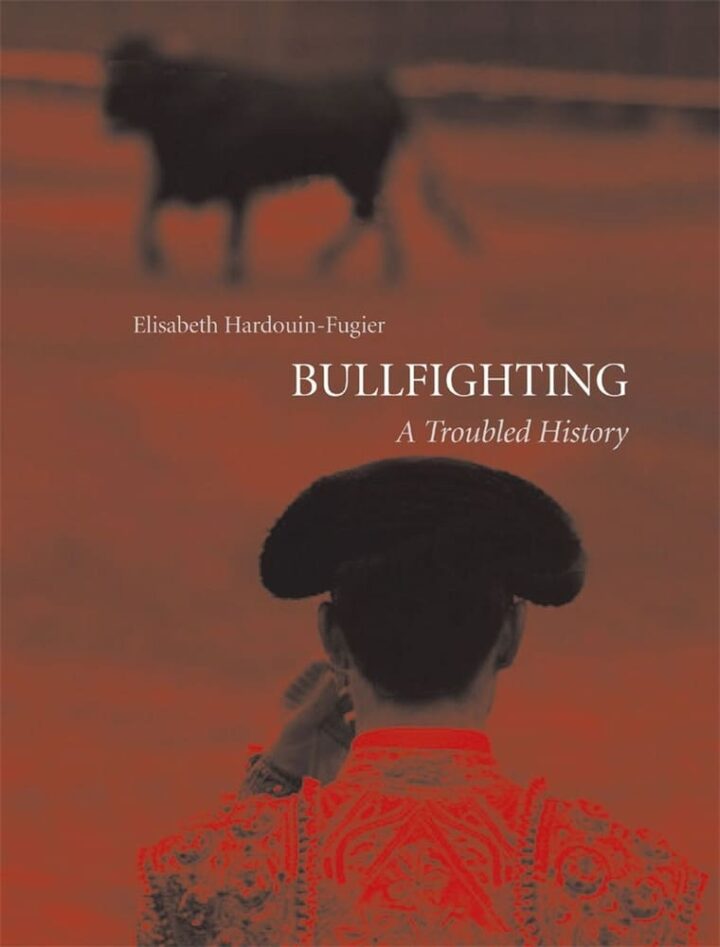
Bullfighting
A Troubled History
Elisabeth Hardouin-FugierBullfighting is the only art in which the artist is in danger of death and in which the degree of brilliance in the performance is left to the fighter's honour. Though opinions are divided, one thing is certain bullfighting sparks passionate responses. This title explores the long history of killing bulls as public spectacle.
‘Bullfighting is the only art in which the artist is in danger of death and in which the degree of brilliance in the performance is left to the fighter's honour’ – Ernest Hemingway, Death in the Afternoon (1926)
Hemingway’s marvelling take on Spanish-style bullfighting – for him a spectacular performance art fraught with risk – is but one among many preposterous evasions of the gross reality that animates one of today's most contested public spectacles. In Bullfighting: A Troubled History, the first-ever cross-cultural study of the subject, Elisabeth Hardouin-Fugier examines at length and in depth the corruptions, cruelties and delusions that over the centuries have made and sustained the world of celebrity cape-and-sword ‘artists’ decked out in fantastically gaudy suits.
The fighting bull has been systematically bred for aggression for centuries, but on the day it faces its nemesis in the ring in Spain, southern France and elsewhere – sometimes drugged and always terrified – it is first agonizingly crippled by means of the picas and banderillas thrust into it prior to the matador’s capital intervention, a ‘killing’ that often leaves the animal still conscious while its ears and tail are being hacked off. At certain fiestas in South America, live condors are bound by their talons to the backs of bulls, a refining torment for both creatures. But Hardouin-Fugier reaches far beyond what is a depressing catalogue of cruelty, for this book considers the social and economic origins and expansion of bullfighting over the centuries, changes in dress and performance codes, breeding, the architecture of the bullrings, tourists, revenues, seat prices, subsidies, celebrity . . . And more, for this richly illustrated investigation includes works by numerous artists, among them Picasso, Manet, Dalí and of course Goya, as well as a fascinating variety of posters past and present and other events ephemera.
Some former bullfighting countries have moved on, while other states (such as Portugal) prefer to place limits on the cruelties permitted in the ring; and there are towns and cities in South America, France and Spain that have imposed municipal bans. What support that remains for bullfighting is diminishing and fatally compromised. But the fight against bullfighting today is far from over, as this important contribution to the debate makes only too clear.
-
'
spectacular . . . not just in its descriptions but in its images, culled from bullfighting's rich visual history.
'The New Yorker
-
'
a terrific history of, and manifesto against, bullfighting by the French art historian Elisabeth Hardouin-Fugier. She falls squarely in the reformist camp, and her history argues that the sport seduced artists, who glamorized and abstracted a cruel and ugly pursuit into something that bore little resemblance to bullfighting itself . . . She stresses the brutal labor conditions of the bull farms, and vividly evokes the persistent cruelty of the life of a fighting bull
'The New Republic
-
'
It's safe to say Hardouin-Fugier isn't an aficionada of the bullring, yet her account of tauromachias troubled history does its best to be fair-minded. The corrida has had its controversial aspects pretty much as long as it's existed, despite the air of chivalric convention and artistic flair created around it in modern times. The cultural richness that's resulted can hardly be denied, as this stunningly (if sometimes disturbing) illustrated book makes clear.
'The Scotsman
-
'
In this broad deconstruction of the meanings of bullfighting, Hardouin-Fugier musters copious data through wide-ranging, often novel, examples art, literature, chronicles. This results in a powerful demythologization of the event and its meanings. Well-illustrated chapters cover history, practices, artistic interpretations, and sociocultural movements that have adopted or rejected the bullfight as a key symbol . . . Marshaling vivid reports and contexts that strip bullfighting of constructed ritual and aesthetic meaning, the book leaves readers with unforgettable images of the torture of animals, of an activity in which cultural producers and capitalist forces are both complicit.
'Choice
1 Fighting Bulls
2 Capital Punishment
3 Plazas and Bullrings
4 What Travellers Saw
5 Nineteenth-century Spain and Latin America
6 Bullfighting, Art, Opera and Dance
7 Beyond Spain
8 The Influence of Art, Film and History
9 In the Twentieth Century
10 Modern Times
11 The Fight against Bullfighting Today
References
Photo Acknowledgements
Index
Elisabeth Hardouin-Fugier is Professor of Art History at the Université Jean-Moulin in Lyon. She is the author of many books, including A History of Floral Painting (1992), A History of French Still Life in the Nineteenth Century (1998) and, with Eric Baratay, the widely acclaimed Zoo: A History of Zoological Gardens in the West (Reaktion, 2002).