


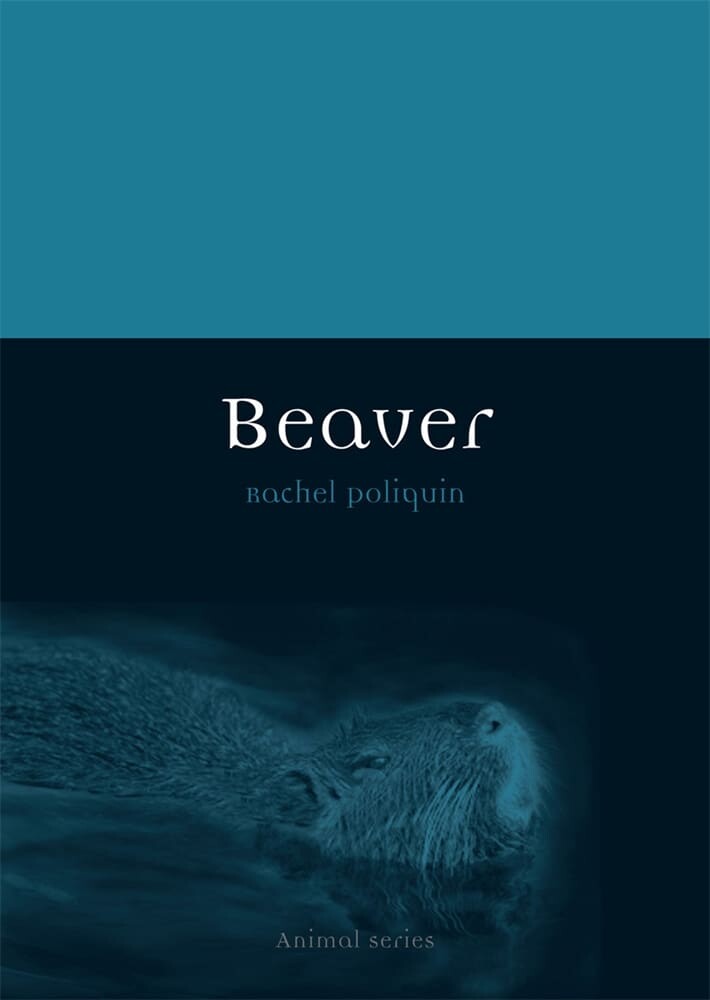
Beaver
Rachel PoliquinRachel Poliquin’s Beaver explores the fascinating history of this small, often-overlooked, yet important animal and examines why the beaver has been hunted throughout the years, as well as looks at the unique way in which beavers form their societies.
With their unique scaly tail, chainsaw teeth, powerful scent and astonishing architectural prowess, beavers are unlike any other creature in the world. Not surprisingly, the beaver has played a fascinating role in human history. Beaver explores the lives and characteristics of these exceptional creatures, from their soft fur to their architecture and their ecological transformations, revealing beavers to be survivors capable of withstanding ice ages, major droughts and predators, except one: humans.
Widely hunted for their fur, beavers were a driving force behind the colonization of North America and remain Canada’s national symbol today. Castoreum, the pungent musk secreted by beavers, was long used in medicine and has been an ingredient in perfumery and food production. From depictions of beavers in the fables of Aesop and Native American mythology to contemporary environmental politics, Rachel Poliquin investigates the facts and fictions of beaver chain gangs, beaver-flavoured ice cream and South America’s ever-growing beaver population.
This beautifully illustrated book, filled with the strange history and improbable tales of the beaver, will delight all readers.
Rachel Poliquin’s Beaver explores the fascinating history of this small, often-overlooked, yet important animal and examines why the beaver has been hunted throughout the years, as well as looks at the unique way in which beavers form their societies.
With their unique scaly tail, chainsaw teeth, powerful scent and astonishing architectural prowess, beavers are unlike any other creature in the world. Not surprisingly, the beaver has played a fascinating role in human history. Beaver explores the lives and characteristics of these exceptional creatures, from their soft fur to their architecture and their ecological transformations, revealing beavers to be survivors capable of withstanding ice ages, major droughts and predators, except one: humans.
Widely hunted for their fur, beavers were a driving force behind the colonization of North America and remain Canada’s national symbol today. Castoreum, the pungent musk secreted by beavers, was long used in medicine and has been an ingredient in perfumery and food production. From depictions of beavers in the fables of Aesop and Native American mythology to contemporary environmental politics, Rachel Poliquin investigates the facts and fictions of beaver chain gangs, beaver-flavoured ice cream and South America’s ever-growing beaver population.
This beautifully illustrated book, filled with the strange history and improbable tales of the beaver, will delight all readers.
-
'
Another in the Animal series of handsome, pocket-sized studies of interesting animals and their relations with humanity down the ages. Strong on style and illustration, this book impresses just as much with its content. Its fascinating to learn just how complex beaver’s construction is, and what makes them so well-equipped.
'Scotland Outdoors
-
'
Poliquin’s book is a natural history, an almanac of mythology and amusing anecdotes from the intermingled histories of beavers and humans. Reaktion has produced a library of animal books ranging from Albatross to Walrus . . . and Beaver is Poliquin’s worthy contribution . . . filled with handsome engravings and historic illustrations.
'Literary Review of Canada
Introduction
1. Beaver
2. Musk
3. Fur
4. Architect
5. Ecologist
Timeline
Glossary
References
Select Bibliography
Associations and Websites
Acknowledgments
Photo Acknowledgments
Index
Rachel Poliquin is a writer and curator. She is the author of The Breathless Zoo: Taxidermy and the Cultures of Longing (2012) and has curated natural history exhibits for the Museum of Vancouver and the Beaty Biodiversity Museum at the University of British Columbia. She lives in Vancouver, Canada.