Amarāvatī
Art and Buddhism in Ancient India
Jaś ElsnerAn exploration of the extraordinary Buddhist reliquary mound at Amarāvatī.
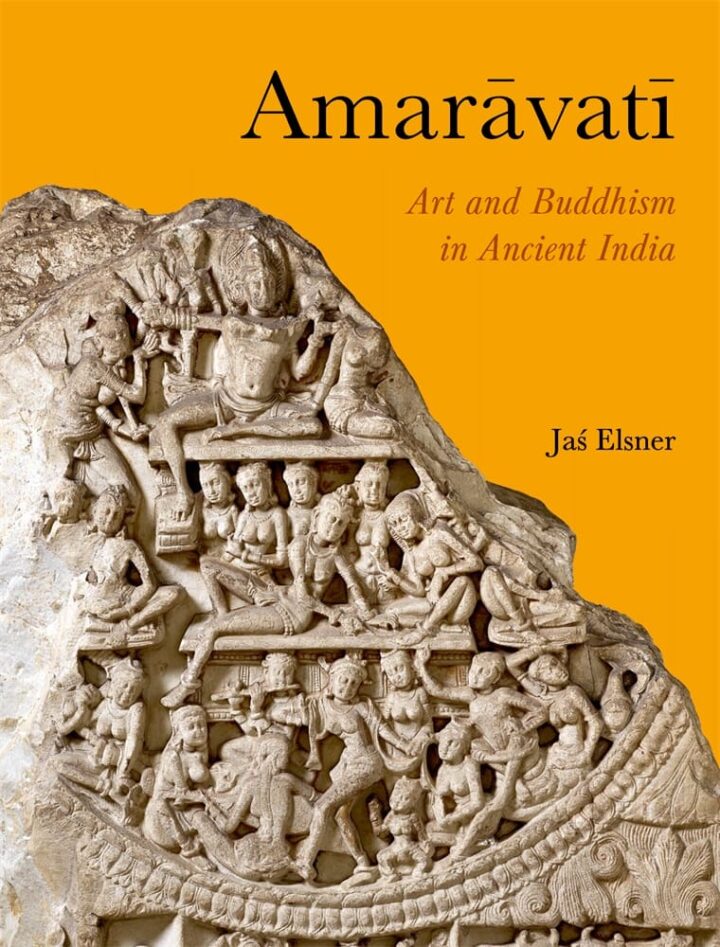
This exploration of the exceptional Buddhist stupa (reliquary mound) at Amarāvatī, one of ancient India’s most extraordinary monuments, presents a fresh perspective on the rich visual culture of ancient South Asia viewed through the lens of art history, connecting the stupa’s artistic innovations with advancements in Buddhist philosophy and rituals. Jaś Elsner offers new insights into early Buddhist art in South India, as well as a new understanding of the relationship between early Buddhism and its material culture. The excellent newly taken photographs, particularly those featuring objects from the British Museum in London, show in detail how the stupa communicated Buddhist teachings and practices to its followers, making this book an invaluable resource for students and scholars alike.
An exploration of the extraordinary Buddhist reliquary mound at Amarāvatī.
This exploration of the exceptional Buddhist stupa (reliquary mound) at Amarāvatī, one of ancient India’s most extraordinary monuments, presents a fresh perspective on the rich visual culture of ancient South Asia viewed through the lens of art history, connecting the stupa’s artistic innovations with advancements in Buddhist philosophy and rituals. Jaś Elsner offers new insights into early Buddhist art in South India, as well as a new understanding of the relationship between early Buddhism and its material culture. The excellent newly taken photographs, particularly those featuring objects from the British Museum in London, show in detail how the stupa communicated Buddhist teachings and practices to its followers, making this book an invaluable resource for students and scholars alike.
-
'
Jaś Elsner’s Amarāvatī: Art and Buddhism in Ancient India marks a revolutionary approach to “visual Buddhology” that triangulates a hermeneutics of iconic objects with texts and practice traditions. In doing so, it breaks down disciplinary barriers, restores the Indian cultural element in Indian Buddhist studies and revises arguments about the rise of Mahayana in early India.
'Deven M. Patel, Associate Professor, University of Pennsylvania, and author of Text to Tradition: The Naiṣadhīyacarita and Literary Community in South Asia
-
'
This precious book looks at the great stupa of Amarāvatī – one of the most important monuments in the ancient world – from seemingly inexhaustible perspectives. It leads the reader to see its monumental form and amazing reliefs, to read its intriguing inscriptions, and to think about its visual, cultural, and ideological connections with the long history of stupa construction, Buddhist mythology and ancient Indian narrative traditions, ritual function and cosmological vision, theatricality and the agency of dance, and philosophical questions evoked by the Buddha’s multiple bodies and foot-prints, all embedded in the building’s architectural and sculptural programs.
'Wu Hung, Harrie A. Vanderstappen Distinguished Service Professor of Art History, University of Chicago
-
'
While it is well-known that some of the greatest Buddhist masters of ancient India hailed from southern India, there seems to be no satisfactory historical understanding of the seminal role Buddhism in south India might have played in the very formation of what came to be known as Mahayana Buddhism. Combining the intricate methods of art history with critical textual and historical enquiry of Buddhist studies, Jaś Elsner offers a rich and engaging account of the devotional energy, vibrancy of philosophical debates, and artistic creativity that must have given rise to the emergence of the Amarāvatī Stupa, undisputedly one of the greatest Buddhist monuments of ancient India. An eye-opening book that I cannot recommend more highly.
'Thupten Jinpa, author of Tsongkhapa: A Buddha in the Land of Snows, and the longtime translator to H.H. the Dalai Lama
Preface
Introduction
Part I: The Great Stūpa at Amarāvatī
1 Approach and Circumambulation
2 The Inscriptions and Their Messages
Part II: Narrative Sculpture
3 Visual Storytelling and the Vision of Karma
Part III: The Wider Indian Context
4 Theatricality
5 Cosmography
Part IV: Icon and Replication
6 Buddhapāda: Symbolism, Visual Epitome and the Creation of Icons
7 Systems of Representation
Conclusion
References
Bibliography
Acknowledgements
Photo Acknowledgements
Index
Jaś Elsner is Professor of Late Antique Art at the University of Oxford and a specialist in comparative art and archaeology. He is the author or editor of many books including Roman Eyes: Visuality and Subjectivity in Art and Text (2007).