


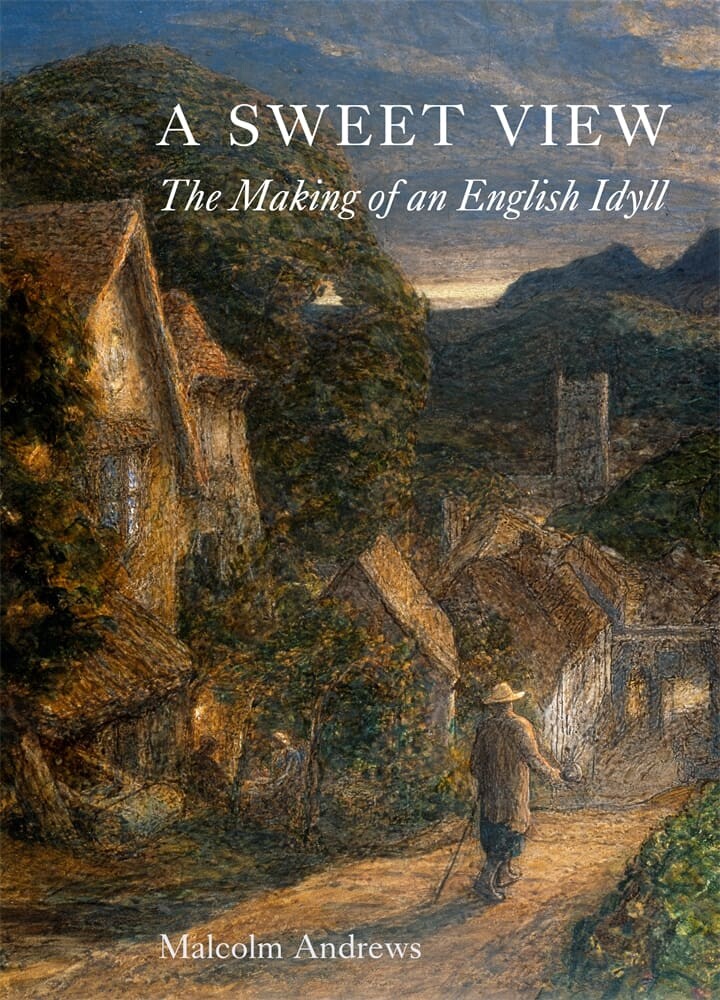
A Sweet View
The Making of an English Idyll
Malcolm AndrewsExamines 19th-century conceptions of the English countryside as an idyll.
A Sweet View explores how writers and artists in the nineteenth century shaped the English countryside as a partly imaginary idyll, with its distinctive repertoire of idealized scenery: the village green, the old country churchyard, hedgerows and cottages, scenic variety concentrated into a small compass, snugness and comfort.
The book draws on a very wide range of contemporary sources, and features some of the key makers of the ‘South Country’ rural idyll, including Samuel Palmer, Myles Birket Foster and Richard Jefferies. The legacy of the idyll still influences popular perceptions of the essential character of a certain kind of English landscape – indeed for Henry James that imagery constituted ‘the very essence of England’ itself. The countryside idyll forged over a century ago is still with us today.
Examines 19th-century conceptions of the English countryside as an idyll.
A Sweet View explores how writers and artists in the nineteenth century shaped the English countryside as a partly imaginary idyll, with its distinctive repertoire of idealized scenery: the village green, the old country churchyard, hedgerows and cottages, scenic variety concentrated into a small compass, snugness and comfort.
The book draws on a very wide range of contemporary sources, and features some of the key makers of the ‘South Country’ rural idyll, including Samuel Palmer, Myles Birket Foster and Richard Jefferies. The legacy of the idyll still influences popular perceptions of the essential character of a certain kind of English landscape – indeed for Henry James that imagery constituted ‘the very essence of England’ itself. The countryside idyll forged over a century ago is still with us today.
-
'
[Andrews] offers a rich and readable account that draws not only on a wide variety of literature – Austen’s Emma is the source of the “sweet view” of the title – but also on an extensive social and political context, one that encompasses industrialization, urbanization and the agricultural changes that shaped both the landscape itself and ideas about it . . . In a final chapter of this illuminating and beautifully illustrated book, Andrews takes his critical scalpel to the “haunt[s] of ancient Peace” imagined by these and other artists and writers of the period, eruditely anatomizing individual elements of the Victorian ideal. The cottage, the church, the village green, pathways, gates and hedgerows are examined in turn to discover the ways in which each was considered to express ideas of Englishness – a subject as relevant today as it was when these beguiling illusions were created.
'TLS
-
'
In this examination of changing perceptions of English landscape, combining meticulous scholarship with new and original readings of a galaxy of writers and artists, Malcolm Andrews guides us from the Georgian fondness for neat fields and tree-lined hedges, through Picturesque excursions, Victorian retrospection and Edwardian nature-writing, to uncover the enduring yet illusory image of "Englishness", distilled in church spires, cottages, and village greens. Subtle, engaging and perceptive, and wonderfully illustrated, A Sweet View is a book to return to again and again.
'Jenny Uglow, OBE, author of biographies of Edward Lear, Elizabeth Gaskell and Thomas Bewick, as well as the award-winning 'The Lunar Men'
-
'
A really delightful survey of what is now a desperately relevant subject: how we should treasure an ever more threatened English landscape.
'Sir Simon Jenkins, former chairman of the National Trust and author of 'England's 100 Best Views'
-
'
Malcolm Andrews brings a wealth of scholarship to the currently inflamed idea of Englishness as portrayed by English artists and described by English authors. It is – a rare word of praise to use in this context – a beautiful book both to read and to look at. Above all, relish.
'John Sutherland, Lord Northcliffe Professor Emeritus of Modern English Literature at University College London
-
'
In this lavishly illustrated and illuminating study Malcolm Andrews . . . provides the reader with a clear-headed and thoughtful guide to the way in which English culture came to be imbricated in perceived links between humanity and the environment . . . this finely articulated study can be recommended reading for everyone with an interest . . . in the broader context of landscape history and art over the last two hundred years.
'Richard Jefferies Society Newsletter
Malcolm Andrews is Emeritus Professor of Victorian and Visual Studies at the University of Kent, and was for 30 years the Editor of The Dickensian. He is the author of many books including Landscape and Western Art (1999).