


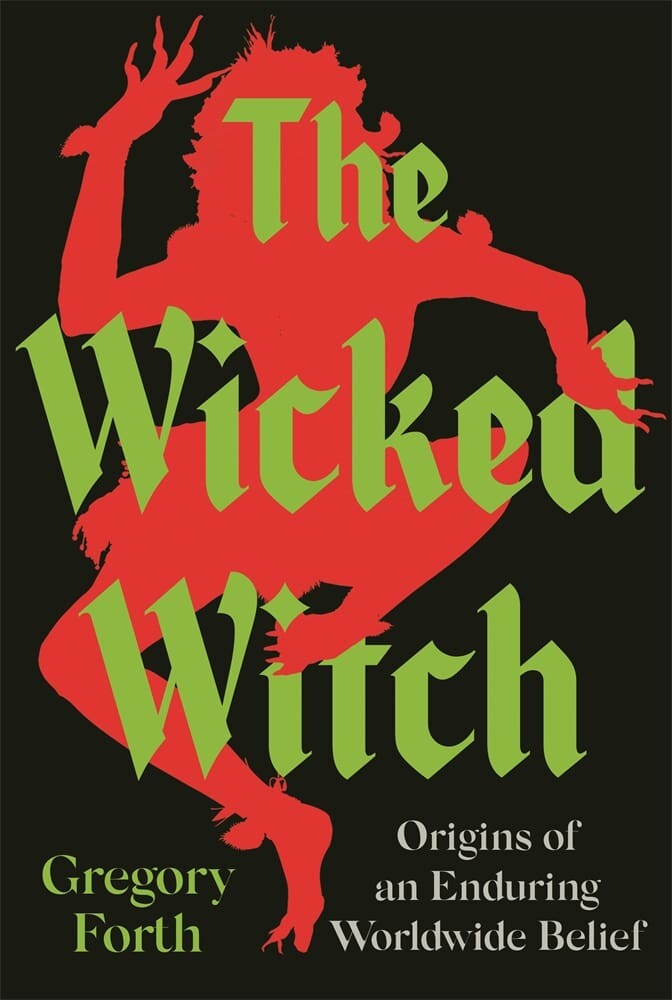
The Wicked Witch
Origins of an Enduring Worldwide Belief
Gregory ForthThe witch: a global mirror of human fear
Few figures haunt the human imagination like the witch. While existing books and media have largely focused on the trials of Early Modern Europe and America, far less explored is the enduring global belief that certain people secretly wield destructive supernatural powers. Drawing on the author’s own field research and a wealth of cross-cultural evidence, this book examines how societies across the world imagine witches in strikingly similar ways: flying by night, shapeshifting into animals, inverting ordinary behaviour and committing horrifying acts – ritual murder, cannibalism, the abuse of children. By tracing these recurring ideas across vastly different cultures, the book uncovers remarkable patterns in human thought, fear and other emotions, and it asks why such concepts persist, pointing to deep social and psychological roots in human evolution.
1 A Most Persistent Idea: The Witch in Pan-Human Thought
2 Old World Shadows: Witches in Europe and the Ancient World
3 Evil at the Edge of the World: My Brush with Witches in Eastern Indonesia
4 Islands of Fiends and Fiery Glows: The Philippines and Oceania
5 Across the Asian Night: Witches in Mainland Asia and Japan
6 Dark Powers of the New World: Indigenous Witches in the Americas
7 Multifarious Manifestations: African Comparisons
8 Modern Hauntings: Western Witches from the Nineteenth to the Twenty-First Century
9 Anatomy of a Nightmare: The Image of the Witch
10 The Logic of Monstrous Evil: The Moral Atrocities of the Witch
11 Women and Witchcraft: The Gender of the Witch and Other Social and Biological Contrasts
12 Where All Paths Begin: The Origin of the Witch
References
Select Bibliography
Acknowledgements
Photo acknowledgements
Index
Gregory Forth is Professor Emeritus of Anthropology at the University of Alberta. His books include Between Ape and Human: An Anthropologist on the Trail of a Hidden Hominoid (2022) and A Dog Pissing at the Edge of a Path: Animal Metaphors in an Eastern Indonesian Society (2019).