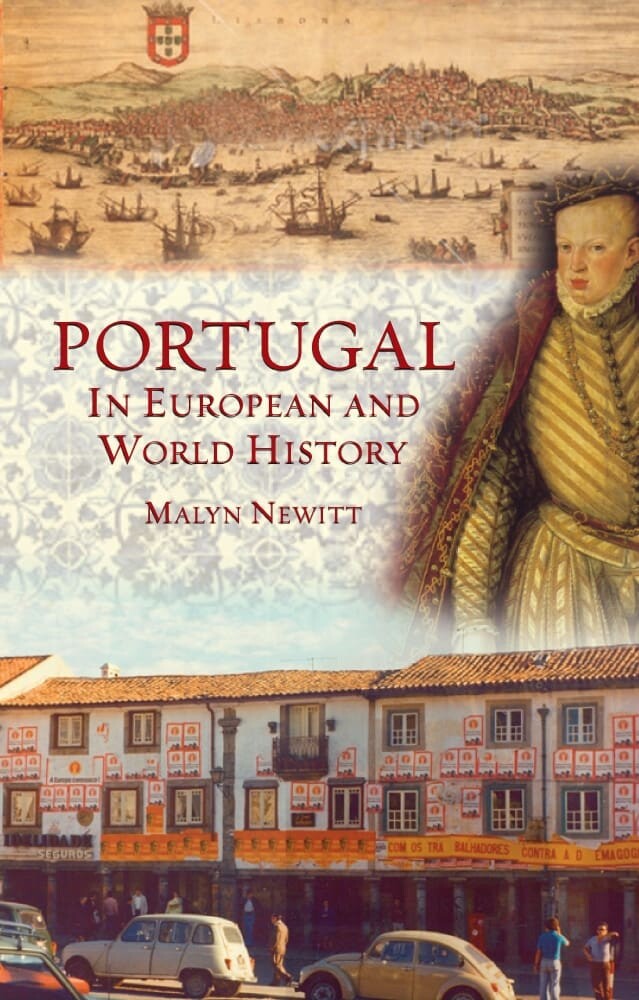
Portugal in European and World History
Malyn NewittPortugal is a country that has sometimes been dismissed as small and relatively unimportant. This title demonstrates that the contrary is true, showing that Portugal has been crucial to the development of Europe and the modern world. It offers a fresh appraisal of Portuguese history and its role in the world.
Portugal is a country that has sometimes been dismissed as small and relatively unimportant. Portugal in European and World History, however, demonstrates that the contrary is true, showing that Portugal has been crucial to the development of Europe and the modern world. Spanning many centuries, from early Moorish times to the Atlantic Empire; the English Alliance of 1650 - 1900; African colonies; the Salazar regime; and the country's liberal revolution in 1974, Malyn Newitt offers a fresh appraisal of Portuguese history and its role in the world.
The author examines episodes where Portugal was a key player or innovator, linking its history to a broader context. Chapters focus on such topics as Moorish Portugal, describing the cultural impact of contact with the Moors; the discovery of Brazil and opening up of trade with western Africa; and the explorations of Vasco de Gama and the evolution of Portugal as the first commercial empire of modern times. Newitt also examines Portugal's role in the Counter-Reformation, in Spain’s wars in Europe, and in the Anglo-Portuguese alliance. The Portuguese diaspora is considered: emigration had been taking place systematically since the fifteenth century but it reached massive proportions between 1820 and 1980. The author also shows how emigration is linked to underdevelopment, imperialism and globalization, and how the Portuguese experience compares with that of other major diasporas. Finally, Portugal’s position in Africa is assessed, the Salazar/Caetano regime of 1928 - 74 examined, and the fall of fascism and decolonization of Portugal explored in the light of global empires and movements.
A new account of a country with a rich history, which has played a key role in the development and expansion of the modern world, Portugal in European and World History shows how Portugal has moved from being the last colonial power to one of the most enthusiastic proponents of the modern European ideal.
Portugal is a country that has sometimes been dismissed as small and relatively unimportant. This title demonstrates that the contrary is true, showing that Portugal has been crucial to the development of Europe and the modern world. It offers a fresh appraisal of Portuguese history and its role in the world.
Portugal is a country that has sometimes been dismissed as small and relatively unimportant. Portugal in European and World History, however, demonstrates that the contrary is true, showing that Portugal has been crucial to the development of Europe and the modern world. Spanning many centuries, from early Moorish times to the Atlantic Empire; the English Alliance of 1650 - 1900; African colonies; the Salazar regime; and the country's liberal revolution in 1974, Malyn Newitt offers a fresh appraisal of Portuguese history and its role in the world.
The author examines episodes where Portugal was a key player or innovator, linking its history to a broader context. Chapters focus on such topics as Moorish Portugal, describing the cultural impact of contact with the Moors; the discovery of Brazil and opening up of trade with western Africa; and the explorations of Vasco de Gama and the evolution of Portugal as the first commercial empire of modern times. Newitt also examines Portugal's role in the Counter-Reformation, in Spain’s wars in Europe, and in the Anglo-Portuguese alliance. The Portuguese diaspora is considered: emigration had been taking place systematically since the fifteenth century but it reached massive proportions between 1820 and 1980. The author also shows how emigration is linked to underdevelopment, imperialism and globalization, and how the Portuguese experience compares with that of other major diasporas. Finally, Portugal’s position in Africa is assessed, the Salazar/Caetano regime of 1928 - 74 examined, and the fall of fascism and decolonization of Portugal explored in the light of global empires and movements.
A new account of a country with a rich history, which has played a key role in the development and expansion of the modern world, Portugal in European and World History shows how Portugal has moved from being the last colonial power to one of the most enthusiastic proponents of the modern European ideal.
-
'
This absorbing study helps explain the emergence and the endurance of this most apparently vulnerable of countries and how, for so much of modern history it has managed to punch above its weight.
'The Scotsman
-
'
Newitts narrative is typical of a powerful writer, who is capable of homing in on his most important goal, that is to say the contextualization of Portuguese history within the great narratives of European events, underlining Portugals importance on the world stage at crucial moments in time. His ability to synthesize material and to communicate with both general and specialized publics is worthy of high praise.
'European History Quarterly
-
'
the book is instructive and ably locates Portugal in its international context . . . throughout, the impression is of a commanding knowledge and judicious reflection.
'Journal of European Studies
-
'
At a time when Portugal has once again made the headlines of the international media (with the blame attached to the crisis over its national debt and the weakness of its economy to adapt to the challenges of European enlargement and globalization), this small volume, filled with illuminating and provocative pointers, may be a good way of putting its triumphs and vulnerabilities into perspective.
'Journal of Contemporary European Studies
-
'
this much-needed book fills a void by providing general audiences with an English-language overview of Portugals often underestimated, yet pivotal, significance in global matters over the past 900 years . . . Highly recommended.
'Choice
List of Maps
Glossary and Abbreviations
Introduction
1 The Second Crusade and the Capture of Lisbon
2 The Hundred Years War and the Crisis of Portuguese Independence
3 Portugal and the Discoveries
4 The First European Maritime Empire
5 The Union with Spain and the Armada 1578-89
6 The Portuguese Restoration and the General Crisis of the Seventeenth Century
7 Portugal, the Inquisition and the Triumph of English Merchant Capitalism
8 The Lisbon Earthquake, the Enlightenment and Crisis Politics
9 Portugal’s Moment of Truth: The French and British Struggle for the Control of Lisbon
10 Portugal among the Great Powers: The Scramble for Africa
11 Portugal and the End of Empire
Epilogue
References
Bibliography
Acknowledgements
Index
Malyn Newitt has taught at the universities of Rhodesia and Exeter, and until he retired was the Charles Boxer Professor of History at King’s College London. His many books include The Braganzas (Reaktion, 2019).