


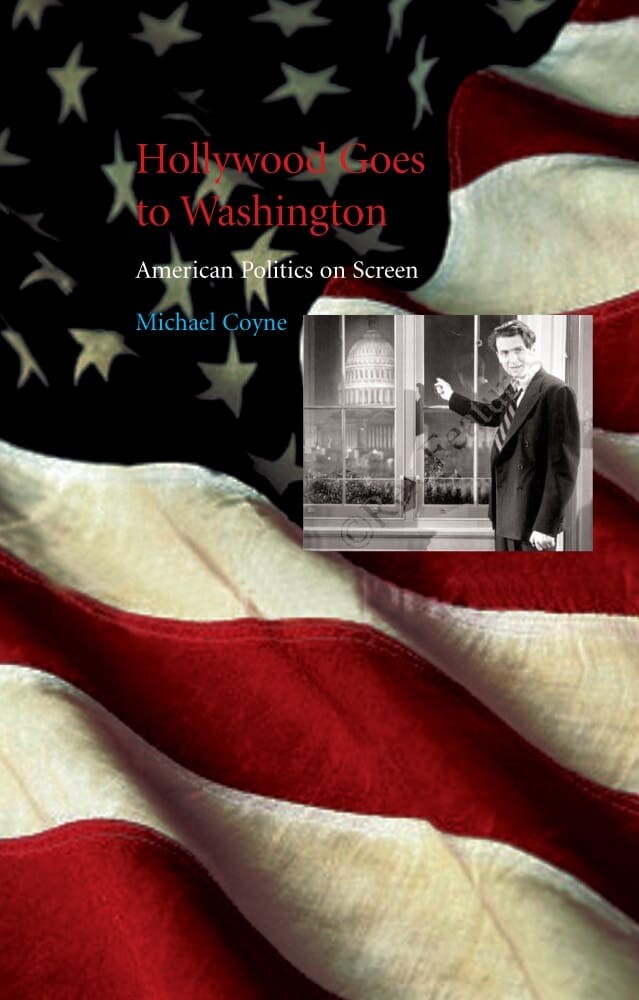
Hollywood Goes to Washington
American Politics on Screen
Michael CoyneThe American political film is one of the most pervasive yet least scrutinized genres in Hollywood cinema. Analyzing key works, both familiar and also previously under-appreciated, this title examines their mythology, ideology and iconography.
The American political film is one of the most pervasive yet least scrutinized genres in Hollywood cinema. It has reflected and addressed major issues and tensions at the heart of American life over the last seventy-five years - from the national emergency of the Great Depression in the early 1930s (Gabriel Over the White House) and the pre-Pearl Harbor paeans to democracy (Mr. Smith Goes to Washington) to potential threats of demagoguery and domestic fascism (Citizen KaneAdvise and Consent) and conspiracy paradigms (The Manchurian Candidate) of the Camelot era to the post-9/11 hysteria of George W. Bush’s America (Silver City).
Ranging widely across both US political and Hollywood history, Michael Coyne brings passion and originality to this incisive survey of American political films. Analysing key works, both familiar and also previously under-appreciated, the author examines their mythology, ideology and iconography.
Coyne ultimately argues that the genre’s legacy is of vital cultural significance, particularly at a time when civil liberties are under attack within the United States. His book will appeal to ‘politics junkies’ and film enthusiasts alike.
The American political film is one of the most pervasive yet least scrutinized genres in Hollywood cinema. Analyzing key works, both familiar and also previously under-appreciated, this title examines their mythology, ideology and iconography.
The American political film is one of the most pervasive yet least scrutinized genres in Hollywood cinema. It has reflected and addressed major issues and tensions at the heart of American life over the last seventy-five years - from the national emergency of the Great Depression in the early 1930s (Gabriel Over the White House) and the pre-Pearl Harbor paeans to democracy (Mr. Smith Goes to Washington) to potential threats of demagoguery and domestic fascism (Citizen KaneAdvise and Consent) and conspiracy paradigms (The Manchurian Candidate) of the Camelot era to the post-9/11 hysteria of George W. Bush’s America (Silver City).
Ranging widely across both US political and Hollywood history, Michael Coyne brings passion and originality to this incisive survey of American political films. Analysing key works, both familiar and also previously under-appreciated, the author examines their mythology, ideology and iconography.
Coyne ultimately argues that the genre’s legacy is of vital cultural significance, particularly at a time when civil liberties are under attack within the United States. His book will appeal to ‘politics junkies’ and film enthusiasts alike.
-
'
A wide-ranging survey of the American political film . . . Coyne does an excellent job of linking actors with their archetypal roles, such as Henry Fonda and his serene, sagacious statesmen, and identifying the less conspicuous similarities between the films he discusses.
'Times Literary Supplement
-
'
Dissections of horror, noir and sci-fi are two-a-penny, but studies of the political movie are less so. Coyne stakes out a brisk claim on this rarely plotted terrain in his packed tome, tracing the genres history from the early30s to now. Coynes fuel is one part scholarly research to several parts rousing rage: his feelings about Bush prompt the contention that these films are needed "now, more than ever."
'Total Film
-
'
Coyne presents a compelling case for Americas political cinema: that it has been pervasive and persistently on target and often ahead of the game with its critical engagements . . . Coynes thesis about American political cinema is likely to ring as true in the future as it does retrospectively.
'Scotland on Sunday
-
'
Film historian Michael Coyne chronicles the politics of paranoia, presidential politics, and the politics of nationhood and national identity in his brief but dense Hollywood Goes to Washington: American Politics on Screen. By turns chatty and analytical, Coynes book is one of the first to identify and quantify the genre of the political film . . . Coyne demonstrates a ready and, when necessary, encyclopedic grasp of the films . . . His analyses integrate effectively his knowledge of American history and politics, film history, sociology, and a smattering of popular culture to brew a satisfying mug of rich cultural coffee, one you want to savor, appreciate its aroma and warm your hands with.
'Cineaste
-
'
does a fine job of evaluating some current debates in the field, and articulating a greater theoretical model for scholars to employ their own analyses. You might not share all the judgements on offer, but this book is provocative, enticing and obdurate, and much the better for that.
'American Studies
-
'
There are few things I find more satisfying than watching a bang-on Hollywood political thriller. Michael Coynes respectful, perceptive analysis of the genre, Hollywood Goes to Washington: American Politics on Screen, is a vital contribution to the surprisingly small body of criticism devoted to this often-great (and sometimes-appalling) genre . . . an entertaining overview of the complex interactions between politics and cinema.
'Media/Culture
-
'
a clear and engaging overview of a large number of films, even shining a spotlight on several lesser-known or forgotten gems . . . Coynes prose can be highly engaging . . . an enjoyable read and would be a useful text in introducing students to many of the major (and minor) films dealing with American politics.
'Scope
-
'
Michael Coyne briskly surveys the rich landscape of films about the American political system. With vivid and often witty analysis, he enables us to discern hitherto murky patterns in the genres constant interplay between idealism and pessimism about Americas future. Readers of all political persuasions will find much to argue with here, as I did with some of his contentions, but thats part of the challenge Coyne offers in his provocative and pugnacious study.
'Joseph McBride, author of Searching for John Ford and Frank Capra: The Catastrophe of Success
Introduction Once Upon a Nation: The Ideology of American Political Films
Chapter 1 American Politics, American Movies: Movie America, Movie History
Chapter 2 Hail to the Chiefs: White House and Silver Screen
Chapter 3 Modern Presidential Parables: John Kennedy, Richard Nixon and Beyond
Chapter 4 Country Boys and City Slickers
Chapter 5 The 'Brief, Shining Moment': Political Movies in the American 'Camelot'
Chapter 6 Enemies Within: White Hoods, Red Scares, Black Lists
Chapter 7 Conspiracy Central
Conclusion Twilight's Last Gleaming?
References
Select Bibliography
Filmography
Acknowledgements
Photo Acknowledgements
Index
Michael Coyne is the author of The Crowded Prairie: American National Identity in the Hollywood Western (1997) and the novel The Sun from Both Sides (2006).