


Political Landscape
The Art History of Nature
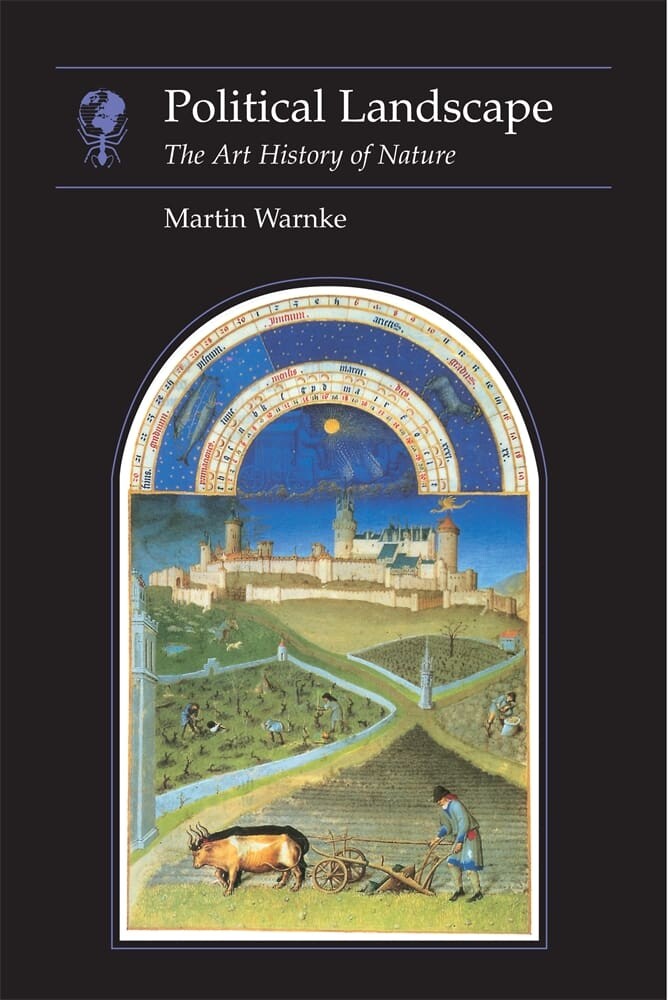
Martin WarnkePoliticians and journalists never tire of referring to “the political landscape”. This book takes the well-worn metaphor literally and uses it to show how politicized the real landscape of continental Europe has been for centuries, with many examples of humanity’s intervention in nature.
We all know what ‘the political landscape’ is, and politicians and journalists never tire of referring to it. But in this ingenious and original book, Martin Warnke takes that well-worn metaphor literally and uses it to reveal just how politicized the real landscape of continental Europe has been for centuries. The author finds his evidence of humanity's intervention in nature in the form of monuments and milestones, gardens, roads and border crossings, in landscape paintings and maps - even, in fact, in the anthropomorphic interpretations once given to formations of hills and rocks.
The Political Landscape is underpinned with a fascinating array of examples and illustrations, many of which will be new even to experts in the art of landscape and related disciplines.
Politicians and journalists never tire of referring to “the political landscape”. This book takes the well-worn metaphor literally and uses it to show how politicized the real landscape of continental Europe has been for centuries, with many examples of humanity’s intervention in nature.
We all know what ‘the political landscape’ is, and politicians and journalists never tire of referring to it. But in this ingenious and original book, Martin Warnke takes that well-worn metaphor literally and uses it to reveal just how politicized the real landscape of continental Europe has been for centuries. The author finds his evidence of humanity's intervention in nature in the form of monuments and milestones, gardens, roads and border crossings, in landscape paintings and maps - even, in fact, in the anthropomorphic interpretations once given to formations of hills and rocks.
The Political Landscape is underpinned with a fascinating array of examples and illustrations, many of which will be new even to experts in the art of landscape and related disciplines.
Politicians and journalists never tire of referring to “the political landscape”. This book takes the well-worn metaphor literally and uses it to show how politicized the real landscape of continental Europe has been for centuries, with many examples of humanity’s intervention in nature.
We all know what ‘the political landscape’ is, and politicians and journalists never tire of referring to it. But in this ingenious and original book, Martin Warnke takes that well-worn metaphor literally and uses it to reveal just how politicized the real landscape of continental Europe has been for centuries. The author finds his evidence of humanity's intervention in nature in the form of monuments and milestones, gardens, roads and border crossings, in landscape paintings and maps - even, in fact, in the anthropomorphic interpretations once given to formations of hills and rocks.
The Political Landscape is underpinned with a fascinating array of examples and illustrations, many of which will be new even to experts in the art of landscape and related disciplines.
Martin Warnke is Professor of Art History at the University of Hamburg. His previous book The Court Artist was first published in 1985