Framing Russian Art
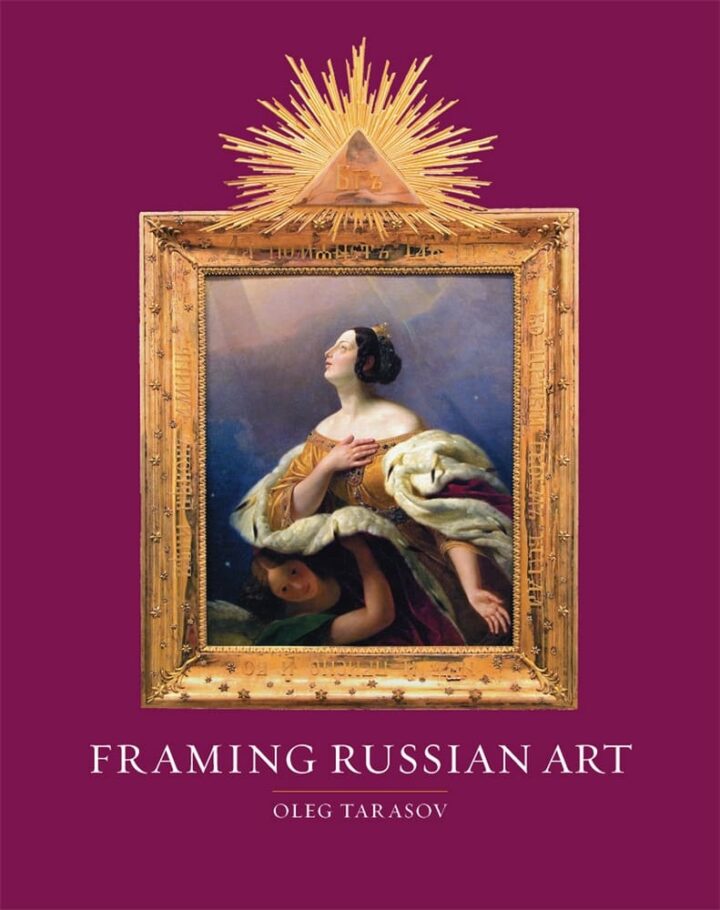
Oleg TarasovFraming Russian Art: From Early Icons to Malevich is a captivating, highly illustrated account of the meaning, status and function of the frame in Russian and European art.
Translated by Robin Milner-Gulland and Antony Wood
The role of the frame in art can refer to a material frame bordering an image and to a conceptual frame – a text, for instance, which is to serve as a commentary to the visual image. What is the meaning of a frame in our understanding of what we see? Why, in some cases, does a frame seem necessary, while in others artists deliberately remove it?
In Framing Russian Art, Oleg Tarasov investigates the role of the frame both literally and conceptually, both in the organization of the artistic space of a work of art and in the very perception of a visual image – an icon, a building, a painting, an etching or a photograph. Part One is dedicated to exploring the frame of the Russian icon and related arks, folding images and prints, from the Middle Ages to the late nineteenth century, including analyses of Grigoriy Shumayev’s vast and extraordinary Baroque masterpiece, which he called ‘the iconostasis of the life-giving Cross’, and the sumptuous blending of medievalism and late Romanticism in the Church Not Made by Hands at Savva Mamontov’s estate of Abramtsevo outside Moscow. Part Two examines the successive roles of the frame in Baroque imperial portraiture, the dynastic grandiloquence of the nineteenth century, the impact of Western ideas and new technology (photography in particular) on the celebrated battle painter Vasiliy Vereshchagin, and finally the impact of the vanishing frame in abstract art and Modernism.
A captivating account of the cultural phenomenon of the frame and its ever-changing functions, this book will open many new vistas for students and scholars of Russian culture and art history.
Framing Russian Art: From Early Icons to Malevich is a captivating, highly illustrated account of the meaning, status and function of the frame in Russian and European art.
Translated by Robin Milner-Gulland and Antony Wood
The role of the frame in art can refer to a material frame bordering an image and to a conceptual frame – a text, for instance, which is to serve as a commentary to the visual image. What is the meaning of a frame in our understanding of what we see? Why, in some cases, does a frame seem necessary, while in others artists deliberately remove it?
In Framing Russian Art, Oleg Tarasov investigates the role of the frame both literally and conceptually, both in the organization of the artistic space of a work of art and in the very perception of a visual image – an icon, a building, a painting, an etching or a photograph. Part One is dedicated to exploring the frame of the Russian icon and related arks, folding images and prints, from the Middle Ages to the late nineteenth century, including analyses of Grigoriy Shumayev’s vast and extraordinary Baroque masterpiece, which he called ‘the iconostasis of the life-giving Cross’, and the sumptuous blending of medievalism and late Romanticism in the Church Not Made by Hands at Savva Mamontov’s estate of Abramtsevo outside Moscow. Part Two examines the successive roles of the frame in Baroque imperial portraiture, the dynastic grandiloquence of the nineteenth century, the impact of Western ideas and new technology (photography in particular) on the celebrated battle painter Vasiliy Vereshchagin, and finally the impact of the vanishing frame in abstract art and Modernism.
A captivating account of the cultural phenomenon of the frame and its ever-changing functions, this book will open many new vistas for students and scholars of Russian culture and art history.
-
'
This is not a book about the frame-makers craft, but a lengthy discussion of the purpose of frames, borders and surrounds in Russian art and architecture. Bringing to bear great scholarship, generously illustrated with numerous reproductions of unusual and beautiful examples, it gives the reader much cause to ponder their functions.
'The Art Newspaper
-
'
The frame is the viewers first point of contact with an image and, as such, it warrants thorough examination. Oleg Tarasovs provocative book, Framing Russian Art, does just that . . . a rousing study of the role and meaning of an aspect of art the frame that often is overlooked. The book convincingly proposes novel questions about the construction of perception of an image and the importance of the frame in art.
'Slavonic and Eastern European Review
-
'
includes much new material and raises several important and interesting points . . . a thought-provoking prism providing valuable insights into a neglected field.
'Burlington
Editorial Preface
Introduction: The Rhetoric of Framing in Russian Art
Part One: Frame and Image
1. Symbolic Unity
2. From the Middle Ages to Romanticism
Part Two: Playing with Space
3. The Lustre of Power
4. Between Industry and Art
Conclusion
Abbreviations
References
Bibliography
Acknowledgements
Index
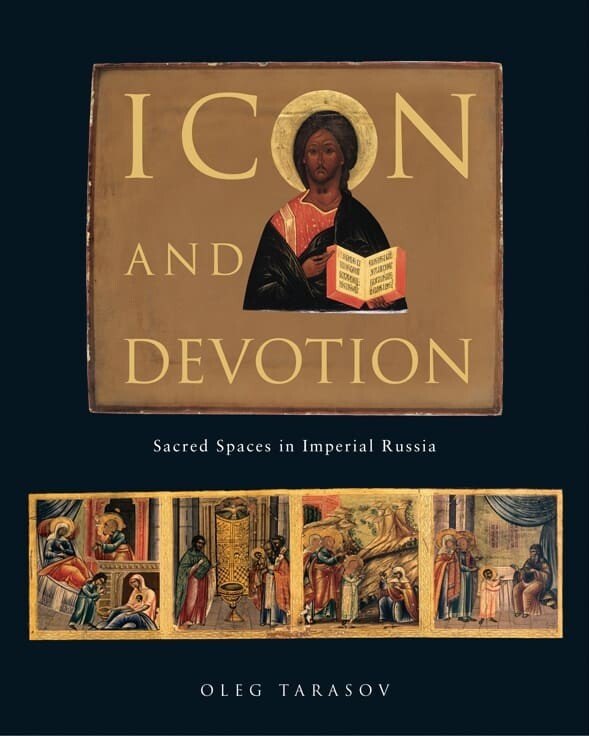
Oleg Tarasov is Senior Research Fellow in the Department of Cultural History of the Institute of Slavic Studies (Russian Academy of Sciences), Moscow. He is the author of Icon and Devotion (2002) and Framing Russian Art (2011), both published by Reaktion Books.