Camera Indica
The Social Life of Indian Photographs
Christopher PinneyExploring the changing role of photographic portraiture in India over the last 150 years, this is an anthropological study of photographic practice in the everyday realm of Indian society. The book combines historical and ethnographic perspectives, based on the author's own experiences in India.
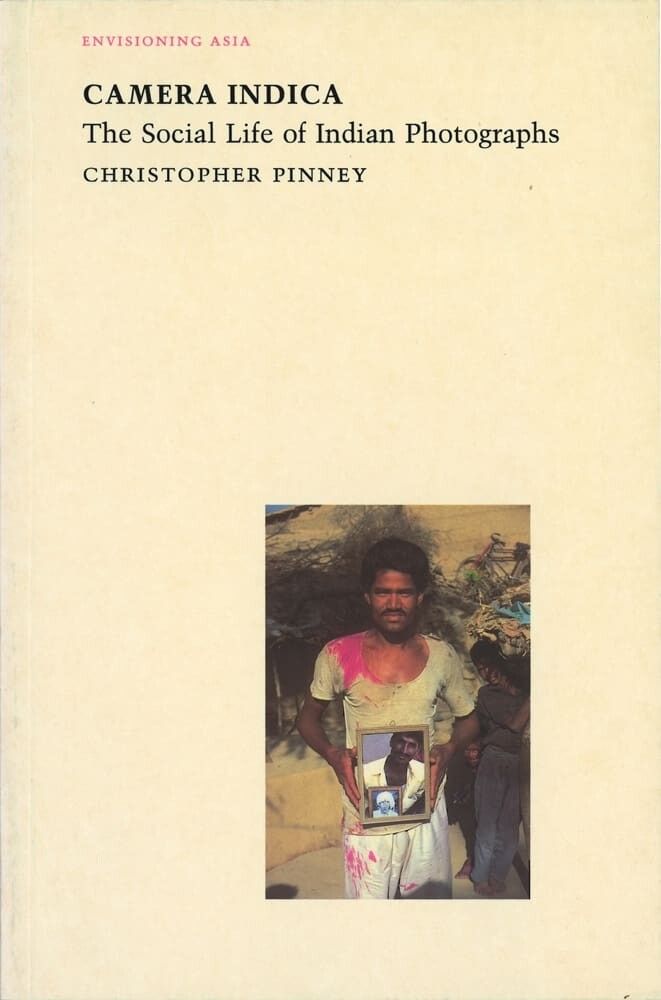
Camera Indica is an exploration of the changing role of photographic portraiture in India over the last 150 years. It is the first anthropological study of photographic practice in the everyday lived reality of Indian society and combines historical and ethnographic perspectives.
Christopher Pinney looks at key ‘moments’ in Indian photography and considers the ways in which photographic portraiture reflects changing political interests, a decreasing desire to fix identity, and a broader popular visual culture. A distinctive post-colonial Indian photographic practice emerges, characterized by a sophisticated inventiveness using techniques such as over-painting, collage, composite printing and doubling. A substantial part of the book is concerned with the production of such images by studios in a small central Indian town, and the reader is given a vivid sense of their use and significance.
Exploring the changing role of photographic portraiture in India over the last 150 years, this is an anthropological study of photographic practice in the everyday realm of Indian society. The book combines historical and ethnographic perspectives, based on the author's own experiences in India.
Camera Indica is an exploration of the changing role of photographic portraiture in India over the last 150 years. It is the first anthropological study of photographic practice in the everyday lived reality of Indian society and combines historical and ethnographic perspectives.
Christopher Pinney looks at key ‘moments’ in Indian photography and considers the ways in which photographic portraiture reflects changing political interests, a decreasing desire to fix identity, and a broader popular visual culture. A distinctive post-colonial Indian photographic practice emerges, characterized by a sophisticated inventiveness using techniques such as over-painting, collage, composite printing and doubling. A substantial part of the book is concerned with the production of such images by studios in a small central Indian town, and the reader is given a vivid sense of their use and significance.
-
'
Christopher Pinney allows ordinary Indians to speak for themselves in Camera Indica, bringing 150 years of Indian history to life . . . enchanting photographs.
'New Statesman
Christopher Pinney is Professor of Anthropology and Visual Culture at University College London. His publications include Camera Indica (1997), Photos of the Gods (2004) and Photography and Anthropology (2011), all published by Reaktion.